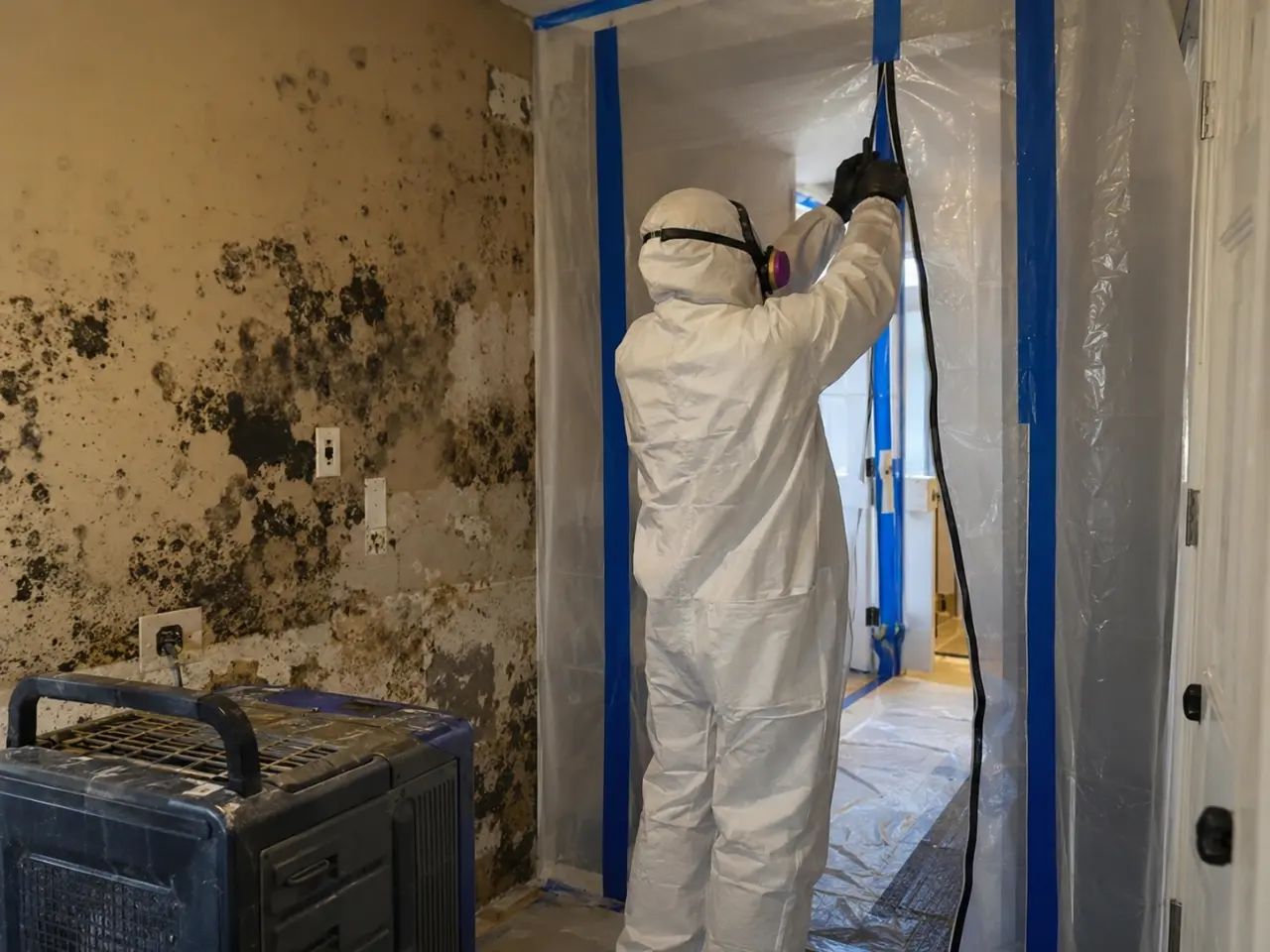
Licensed, insured, and equipped for hidden mold behind drywall and above ceilings
Wall and Ceiling Mold Removal Toledo OH That Gets It Dry
Wall and Ceiling Mold Removal Toledo OH starts with finding the moisture, not just scrubbing the stain. We map damp drywall, ceiling tiles, and plaster in homes from Point Place to Southwyck, then contain, remove, and dry the structure so mold does not return. If you have spotted dark patches, bubbling paint, or a musty smell after a roof leak or plumbing drip, call (419) 880-8176 for a same-day look.
Live dispatcherUpfront optionsBacked workmanship
What's included
What Our Wall and Ceiling Mold Removal Includes
Every job is scoped to the actual moisture readings in your home, but these are the core pieces that come with wall and ceiling mold cleanup in Toledo. If your scope needs reconstruction or attic work, we price that separately and tell you before we start.
Moisture Mapping and Scope
We check walls, ceilings, and the cavities behind them with a moisture meter, hygrometer, and thermal imaging camera. You get a written scope showing what comes out, what gets treated, and what it costs, usually the same day you call.
Containment and Air Scrubbing
Polyethylene containment sheeting and duct tape seal the work zone, and a negative air machine with a HEPA air scrubber keeps spores out of the rest of your house. We set this up before any material is disturbed.
Removal of Affected Materials
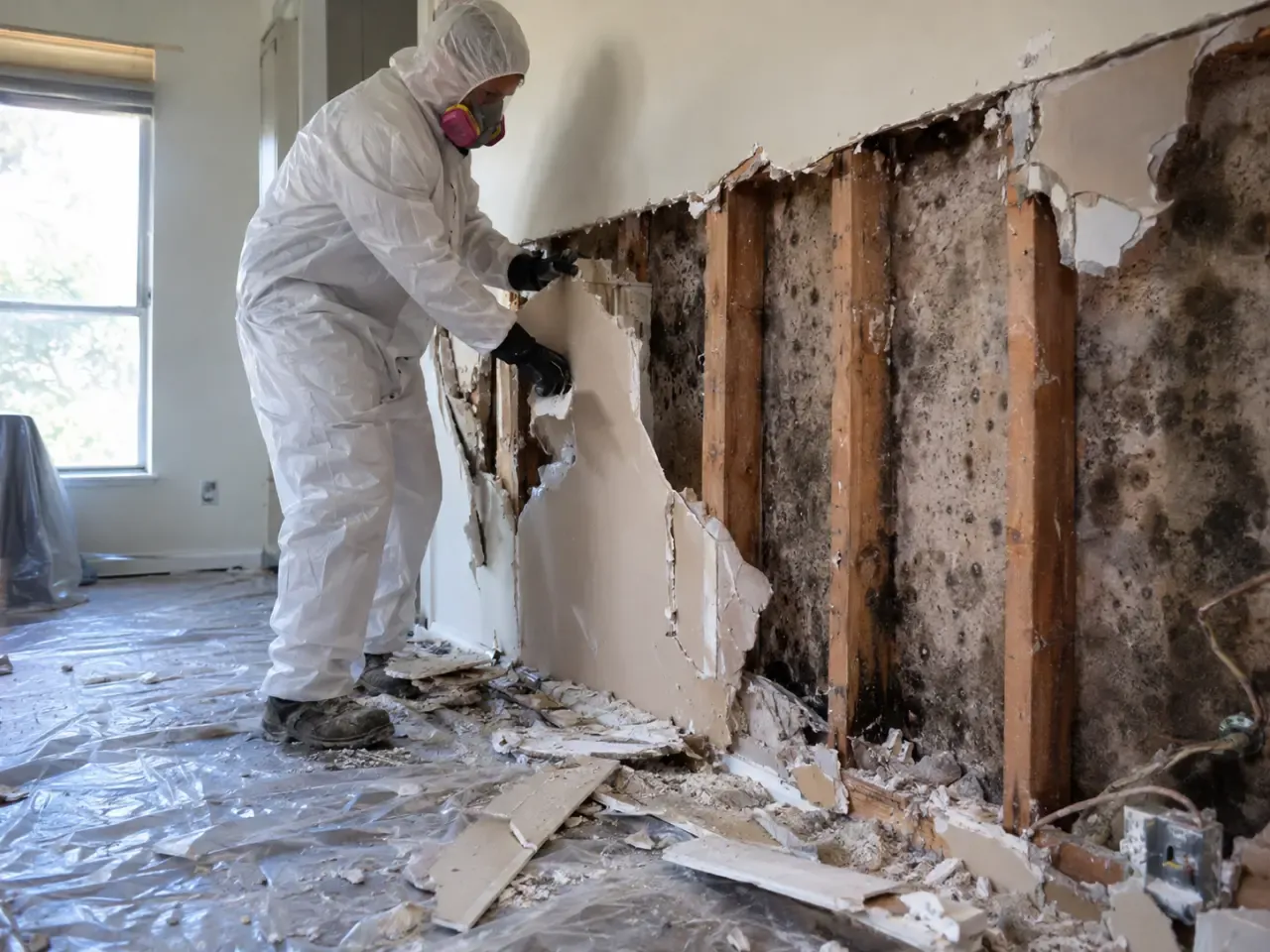
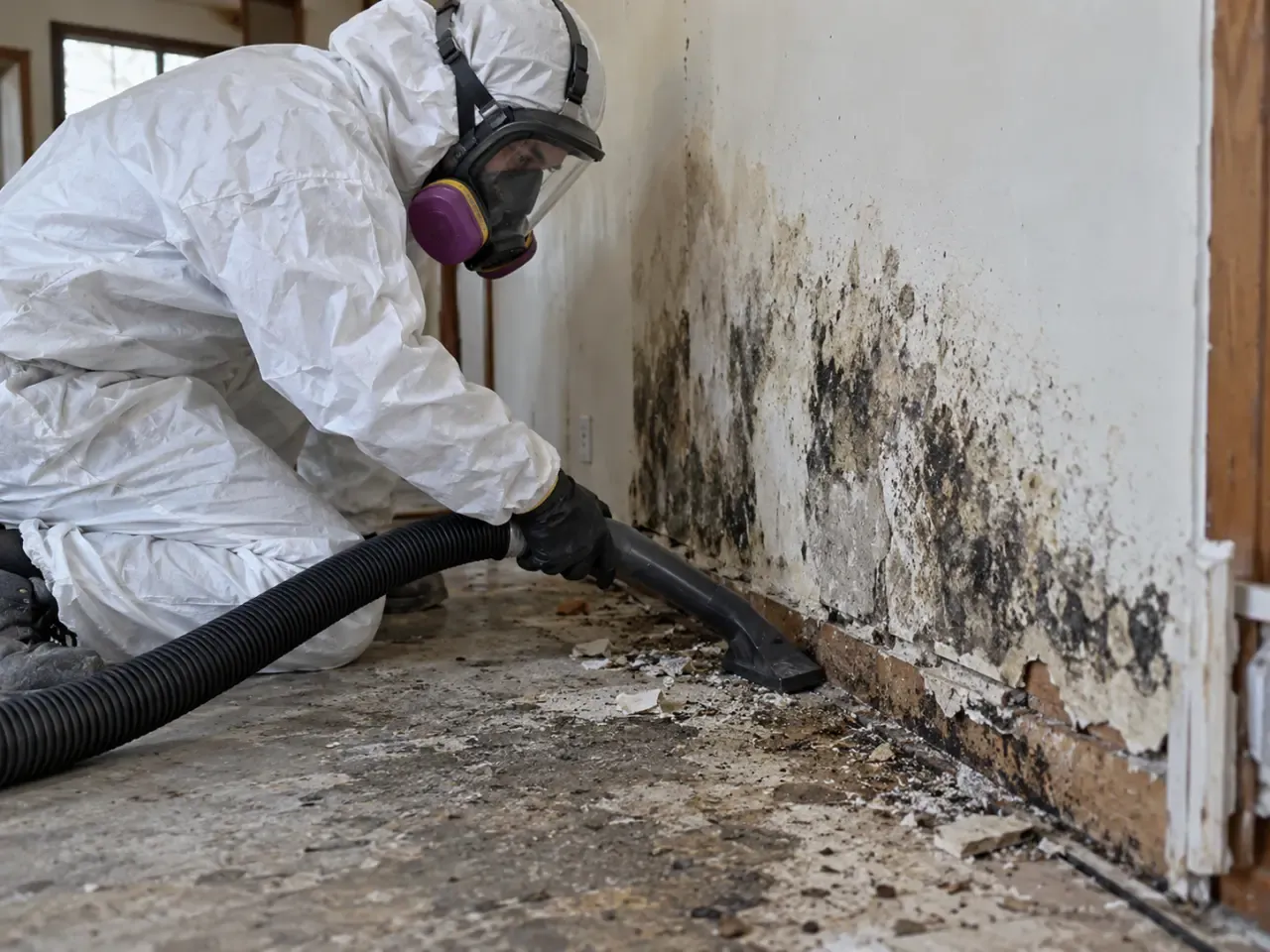
Moldy drywall, ceiling tile, and wet insulation come out in sealed bags and get disposed of properly. We cut 12 to 24 inches past the last visible growth so hidden mold behind the drywall does not get left behind.
Antimicrobial Treatment and Drying
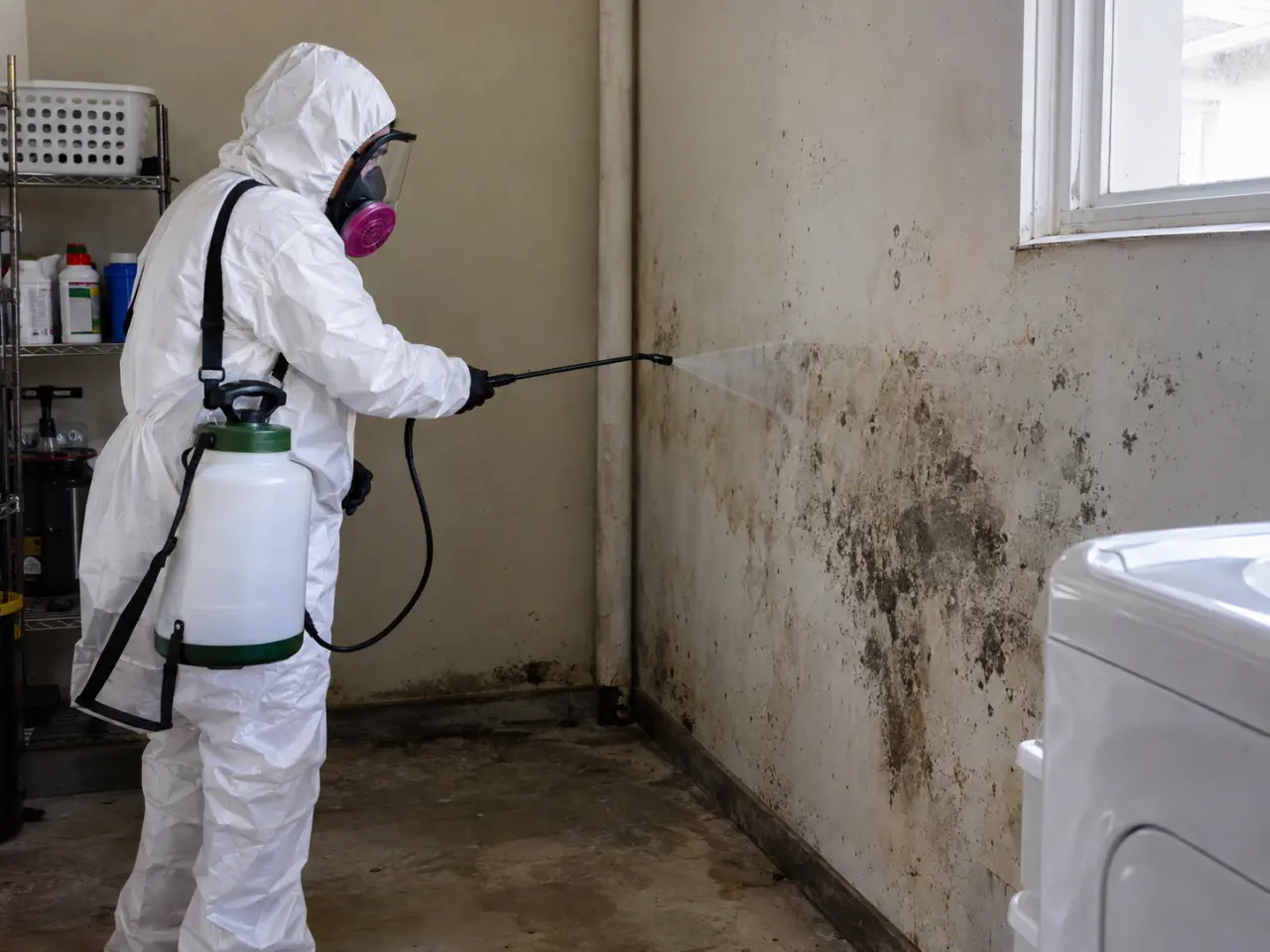
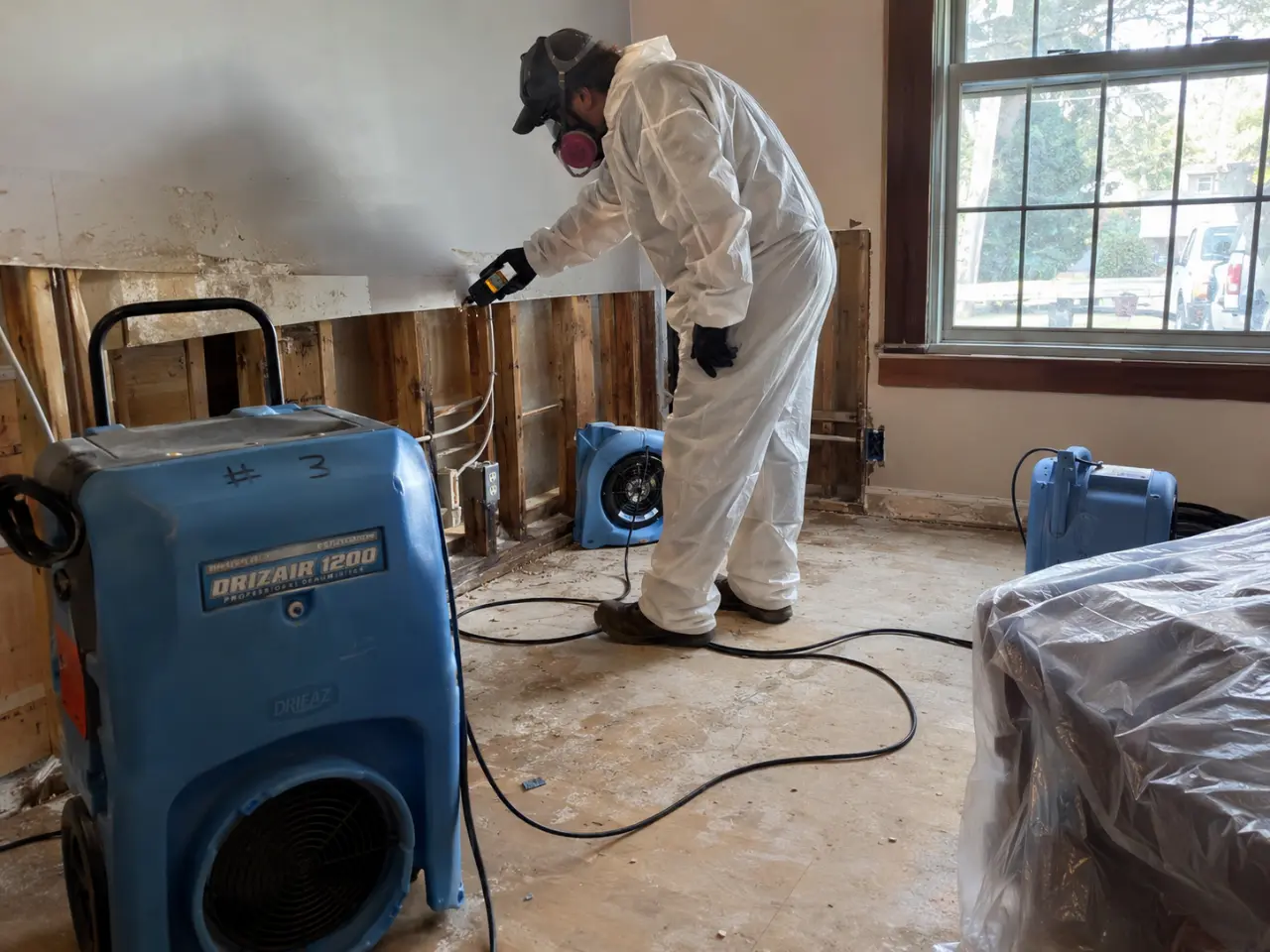
Exposed framing gets an antimicrobial surface treatment, then Dri-Eaz or Phoenix Restoration Equipment dehumidifiers and air movers dry the cavity. We log readings daily and do not pull equipment until the framing is at dry standard.
Final Verification and Walkthrough
We HEPA vacuum all surfaces, wipe down containment, and take air samples with an air sampling pump when the scope calls for it. Then we walk you through the readings and the results before we call the job complete.
Service overview
Wall and Ceiling Mold Removal Toledo OH: What the Job Actually Involves
Wall and Ceiling Mold Removal Toledo OH is the contained removal of fungal growth from interior wall assemblies, ceilings, and the cavities behind them, followed by drying and verification. We use a moisture meter and thermal imaging camera to trace where water traveled, because mold on a ceiling is usually the visible end of a leak that started somewhere else. Then we build polyethylene containment, run a negative air machine with a HEPA air scrubber, and remove affected drywall, plaster, or insulation rather than painting over it.
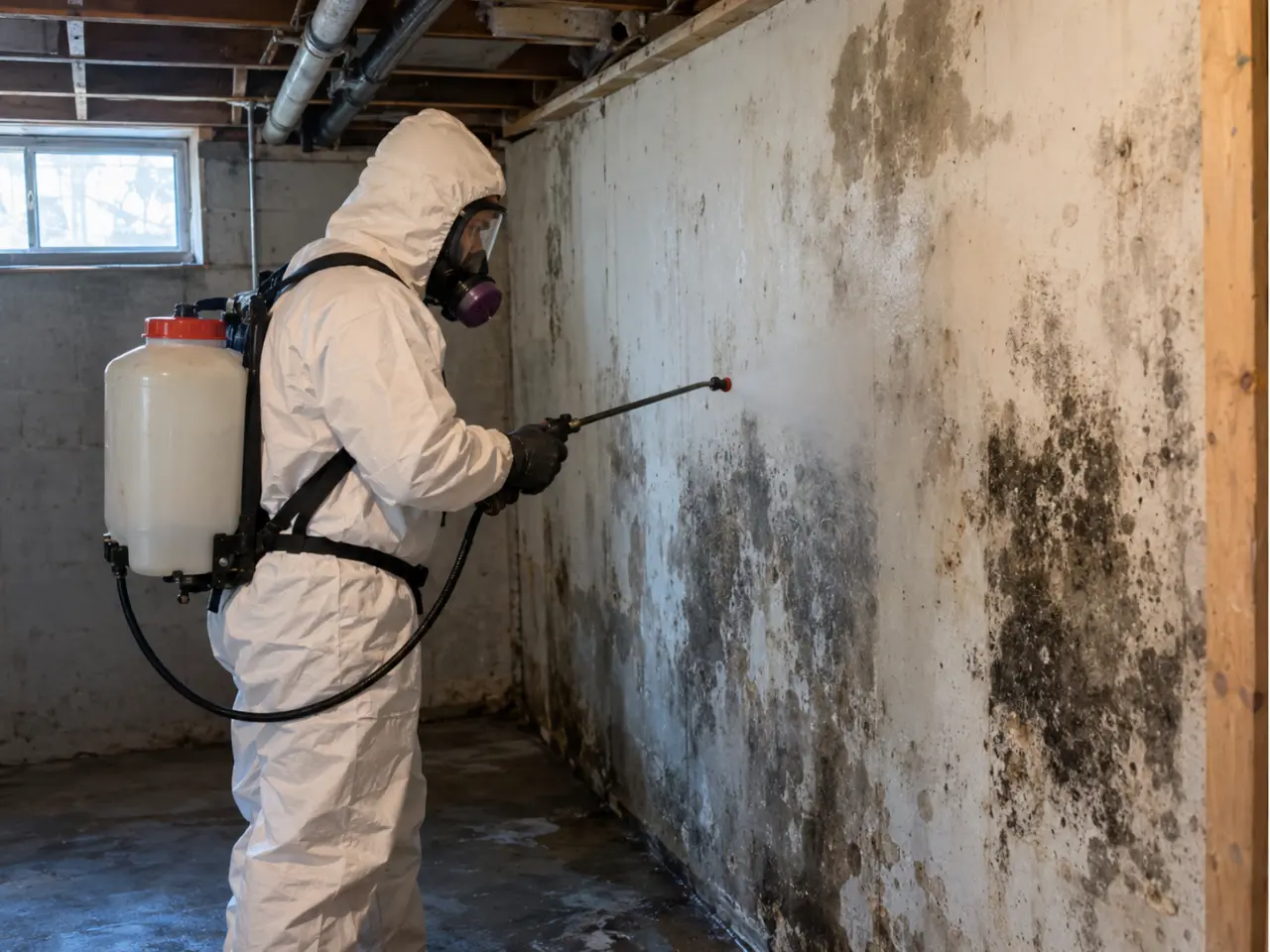
Toledo homes deal with two mold seasons, not one. Spring rain and summer humidity push moisture through brick and block foundations in older neighborhoods, while winter ice dams and roof leaks soak ceiling drywall in Franklin Park and Westgate. If you search for wall and ceiling mold removal near me Toledo OH after a storm, you are usually looking at hidden mold behind drywall that has been wet for weeks. We dry the cavity first, then treat the framing with an antimicrobial surface treatment before any new material goes back.
How we workWe verify the cause, compare realistic options, and confirm the repair before we leave.
The service timeline
Our Wall and Ceiling Mold Removal Process
The process flexes to the condition, but these checkpoints keep decisions clear.
Inspect and Map
We walk the affected rooms with a moisture meter, hygrometer, and thermal imaging camera to find every wet spot, not just the visible stain. You get a verbal read on the spot and a written scope the same day. This step usually takes 45 to 90 minutes.
Build Containment
We seal doorways and vents with polyethylene containment sheeting and duct tape, then set a negative air machine with a HEPA air scrubber. This keeps spores out of the rest of your house while we work. Setup takes about 30 to 60 minutes depending on room count.
Remove Affected Material
Moldy drywall, ceiling tile, and wet insulation come out in sealed bags. We cut back 12 to 24 inches past the last visible growth so we are not leaving hidden mold behind the drywall. Plaster walls get evaluated with a moisture meter before we decide to remove or save.
Treat and Dry
Exposed framing gets an antimicrobial surface treatment, then we position Dri-Eaz or Phoenix Restoration Equipment dehumidifiers and air movers to dry the cavity. Depending on saturation, this runs 1 to 3 days. We check readings daily and adjust equipment as the numbers drop.
Verify and Close
We HEPA vacuum all surfaces, wipe down containment, and take air samples with an air sampling pump when the scope calls for it. Once readings are clean, we remove the plastic and walk you through the results. Reconstruction or drywall repair can be scheduled the same week.
Tools & methods
Tools and Methods We Use
Purpose-built equipment, used by trained technicians, so the job is done accurately the first time.
Protimeter moisture meter
Pin and pinless readings tell us exactly how wet the drywall, plaster, and framing are before and after drying.
FLIR thermal imaging camera
Finds temperature differences that reveal hidden moisture behind walls and above ceilings without tearing everything open.
HEPA air scrubber and negative air machine
Keeps airborne spores inside the containment zone and filters the air before it leaves the work area.
Dri-Eaz and Phoenix Restoration Equipment dehumidifiers
Pulls moisture out of wall cavities and ceiling assemblies fast, so drying finishes in days instead of weeks.
XPOWER air movers
Directs airflow across exposed framing and drywall edges to speed evaporation and prevent secondary growth.
ProTeam HEPA vacuum
Cleans settled spores from surfaces and containment plastic before the work zone comes down.
Air sampling pump
Collects post-remediation air samples when verification is needed for clearance or insurance documentation.
Use cases
When to Call for Wall and Ceiling Mold Removal
These examples show how the service framework adapts rather than forcing every call through one repair.
Plumbing Leak Wall in Reynolds Corners
A slow supply-line leak behind the laundry wall had been wet for months. The drywall felt soft, the baseboard was stained, and the hallway smelled musty. Thermal imaging showed moisture 4 feet past the visible damage. → We cut out the affected drywall, treated the framing with an antimicrobial surface treatment, and ran a Dri-Eaz dehumidifier for three days. Post-drying readings came in at 10% to 11% across the cavity.
Basement Wall in Point Place
Spring seepage had soaked the lower 2 feet of a finished basement wall. Black mold growth was visible along the baseplate, and the family room smelled damp every time it rained. → We removed the moldy drywall and baseboard, treated the block with an antimicrobial surface treatment, and dried the space with dehumidifiers. Then we sealed the vapor barrier and reinstalled mold-resistant drywall.
Problems we solve
Wall and Ceiling Mold Problems We Solve in Toledo
Most mold calls start with a stain, a smell, or a leak someone hoped would dry on its own. These are the situations we handle most often in Toledo homes.
Hidden mold behind drywall after a slow leak
We use a thermal imaging camera and moisture meter to find the wet zone, cut a small inspection opening, and confirm growth before building full containment. Then we remove the affected drywall, treat the framing, and dry the cavity. The leak gets repaired before anything goes back.
Ceiling mold after a roof leak or ice dam
We trace the water path from the ceiling back to the roof entry point, remove saturated insulation and moldy ceiling drywall, and dry the joists. If the attic is the source, we recommend attic mold remediation and ventilation fixes so the ceiling does not get wet again next winter.
Basement wall mold from damp block foundations
We remove moldy drywall or paneling at the base of the wall, treat the block with an antimicrobial surface treatment, and dry the space with dehumidifiers. Then we seal the vapor barrier and set up moisture control so the wall stays dry through the wet season.
Bathroom ceiling mold from poor ventilation
We remove the affected ceiling drywall, treat the framing, and check the fan's actual airflow. If it is undersized, we tell you what CFM rating your bathroom needs. Fixing the ventilation is what stops the mold from coming back.
Pricing process
What Wall and Ceiling Mold Removal Costs
$450 - $3,500+ depending on scope
Square footage affected
A 2-foot ceiling stain is a different job than a full wall. We price by the area of material removed, not by the size of the room, so you only pay for what actually comes out.
Drywall vs. plaster
Moldy drywall comes out and goes in the dumpster. Plaster walls take longer to evaluate and sometimes can be saved, which changes both labor and disposal costs.
Cavity moisture level
If the framing is still wet, drying equipment runs longer. A cavity at 25% moisture may need three days of dehumidification, while a dry cavity can be treated and closed faster.
Questions before we arrive
Frequently Asked Questions About Wall and Ceiling Mold Removal in Toledo
How much does wall and ceiling mold removal cost in Toledo?
Most single-room jobs run $450 to $1,800 in 2026, with whole-floor scopes reaching $3,500 or more. Price depends on how much drywall comes out, whether the cavity is still wet, and whether reconstruction is included. A small ceiling stain with dry framing sits at the low end; a flooded basement wall with saturated insulation and hidden mold behind drywall pushes the number up. We give you the range after moisture readings, not before.
Who removes mold from drywall in Toledo OH?
Toledo Mold Defense removes mold from drywall in Toledo OH, and we are set up for the containment and drying that the job requires. Call (419) 880-8176 and we will schedule a same-day look. We handle the tear-out, antimicrobial treatment, structural drying, and the drywall repair afterward. If you are comparing bids, ask whether the company follows the ANSI/IICRC S520 Standard and carries IICRC certification, because that separates a real remediation from a paint-over.
Does moldy drywall need to be removed?
Yes, in most cases. Drywall is porous, so once mold roots into the paper facing and gypsum core, cleaning the surface does not remove the growth inside. We cut back 12 to 24 inches past the last visible spot and check the framing with a moisture meter. Plaster walls are different and sometimes salvageable if the mold is surface-level and the wall is dry. We make that call on site, and we explain the reasoning before we cut.
What causes mold spots to appear on a Toledo ceiling?
Ceiling mold in Toledo usually traces to a roof leak, an ice dam, a plumbing drip, or attic condensation from poor ventilation. The stain shows up on the ceiling, but the water is coming from above. We use a thermal imaging camera and moisture meter to follow the path, then fix the moisture source before treating the ceiling. If the attic is the culprit, we may recommend attic mold remediation and added ventilation to stop it from coming back.
Related services
Related Services
Residential Mold Remediation
Whole-home mold work for Toledo houses, from basement rim joists to bedroom ceilings. If your wall and ceiling job turns up growth in a crawlspace or closet, we fold it into the same containment and drying plan so you are not paying for two setups.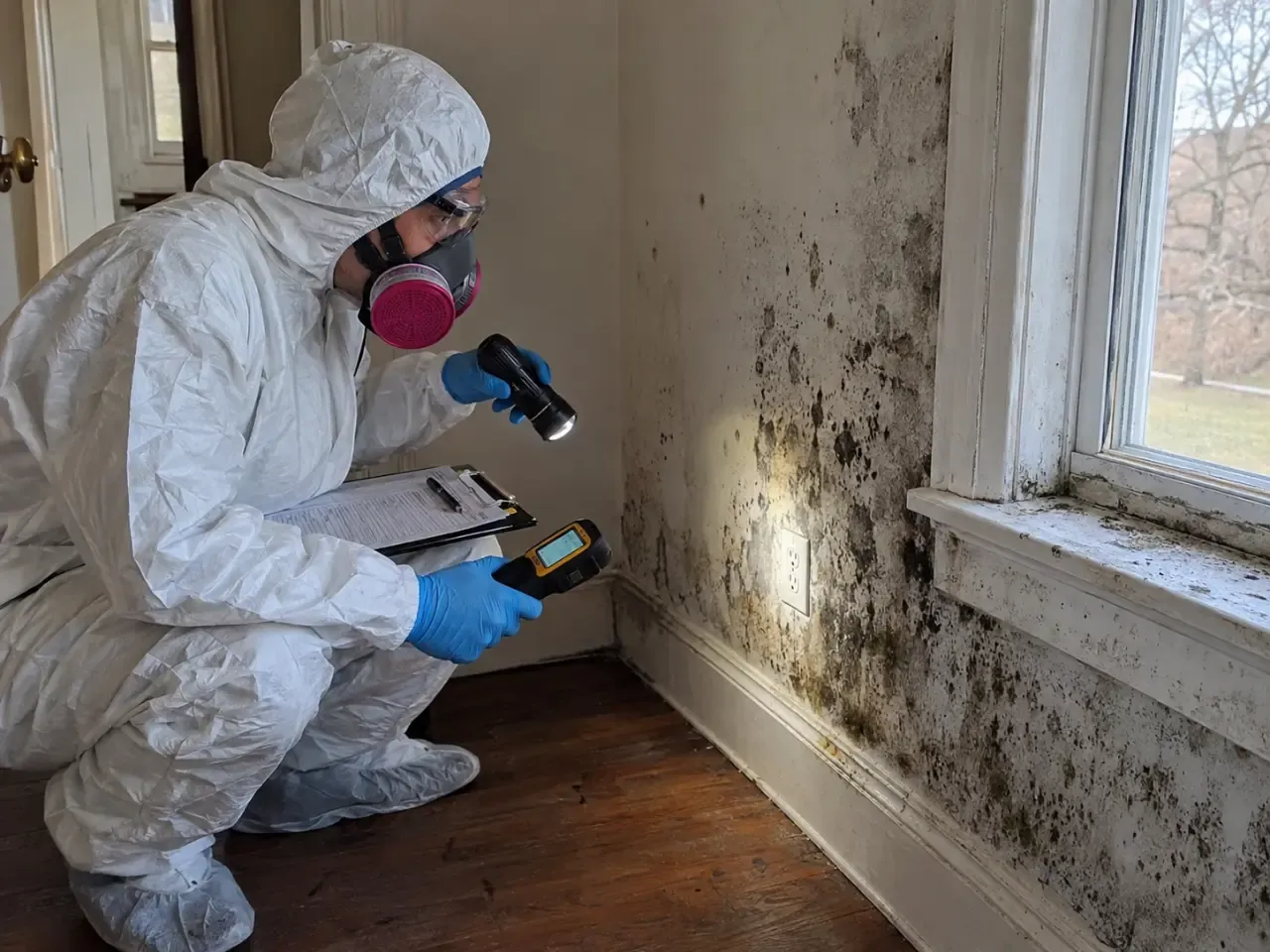
Commercial Mold Remediation
Offices, rentals, and retail spaces in Toledo need mold handled without shutting the doors for a week. We phase wall and ceiling removal around your hours, use negative air machines to keep other suites clean, and document everything for property managers and insurers.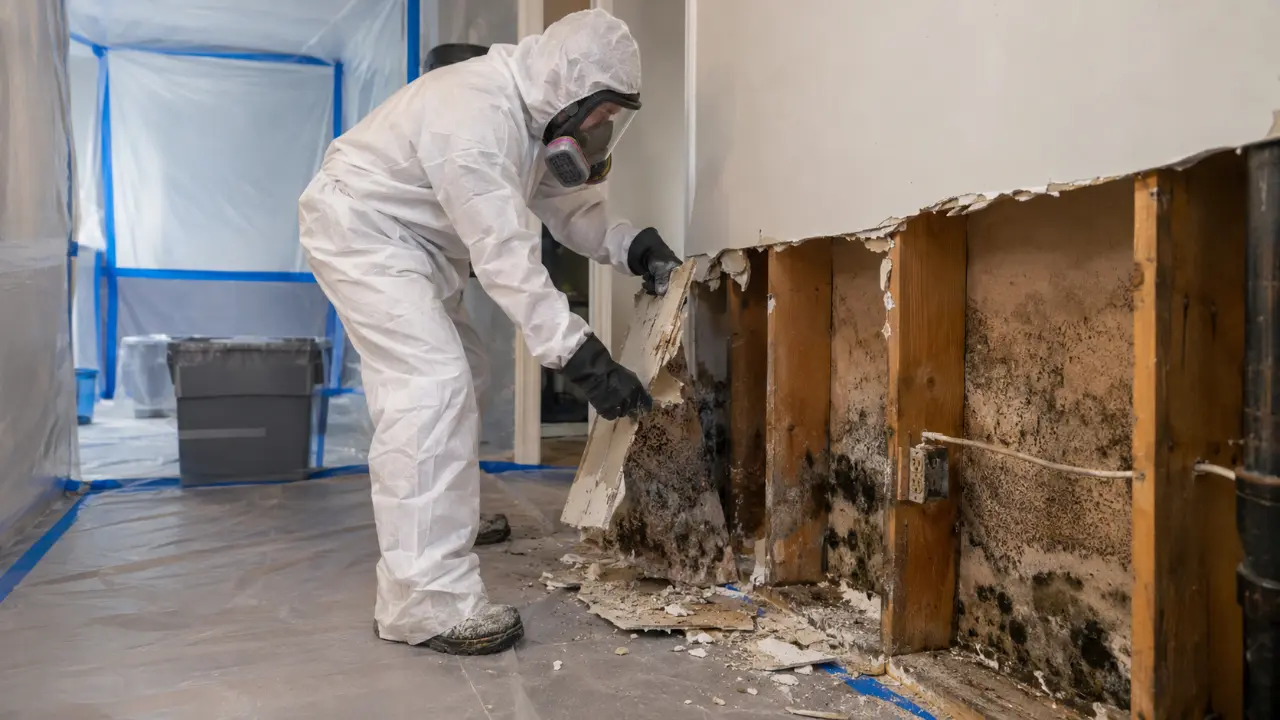
Black Mold Removal
Stachybotrys chartarum, the black mold people worry about, needs the same containment and removal as any other growth but with tighter protocols. We treat it under ANSI/IICRC S520, use P100 respirators, and verify with air sampling before we call it clear.Ready when you are
Get Your Wall and Ceiling Mold Removal Toledo OH Quote Today
Mold on a wall or ceiling spreads while you wait. Call Toledo Mold Defense at (419) 880-8176 for a same-day look, a written scope, and a crew that follows the ANSI/IICRC S520 Standard on every job. Licensed, insured, and local to Lucas County.
Talk with the local team
Request Wall & Ceiling Mold Removal
Call (419) 880-8176 any time, day or night. We answer 24/7 and schedule most Toledo-area inspections the same day you reach out. If you have a flooded basement or a musty smell you cannot place, tell us what you are seeing and we will get a technician out to look at it.