Hidden Mold Problems in Toledo Homes With Aging Plumbing
Aging galvanized and cast-iron pipes fail slowly inside Toledo's older walls. Here's how hidden mold grows, how to find it, and what cleanup costs in 2026.
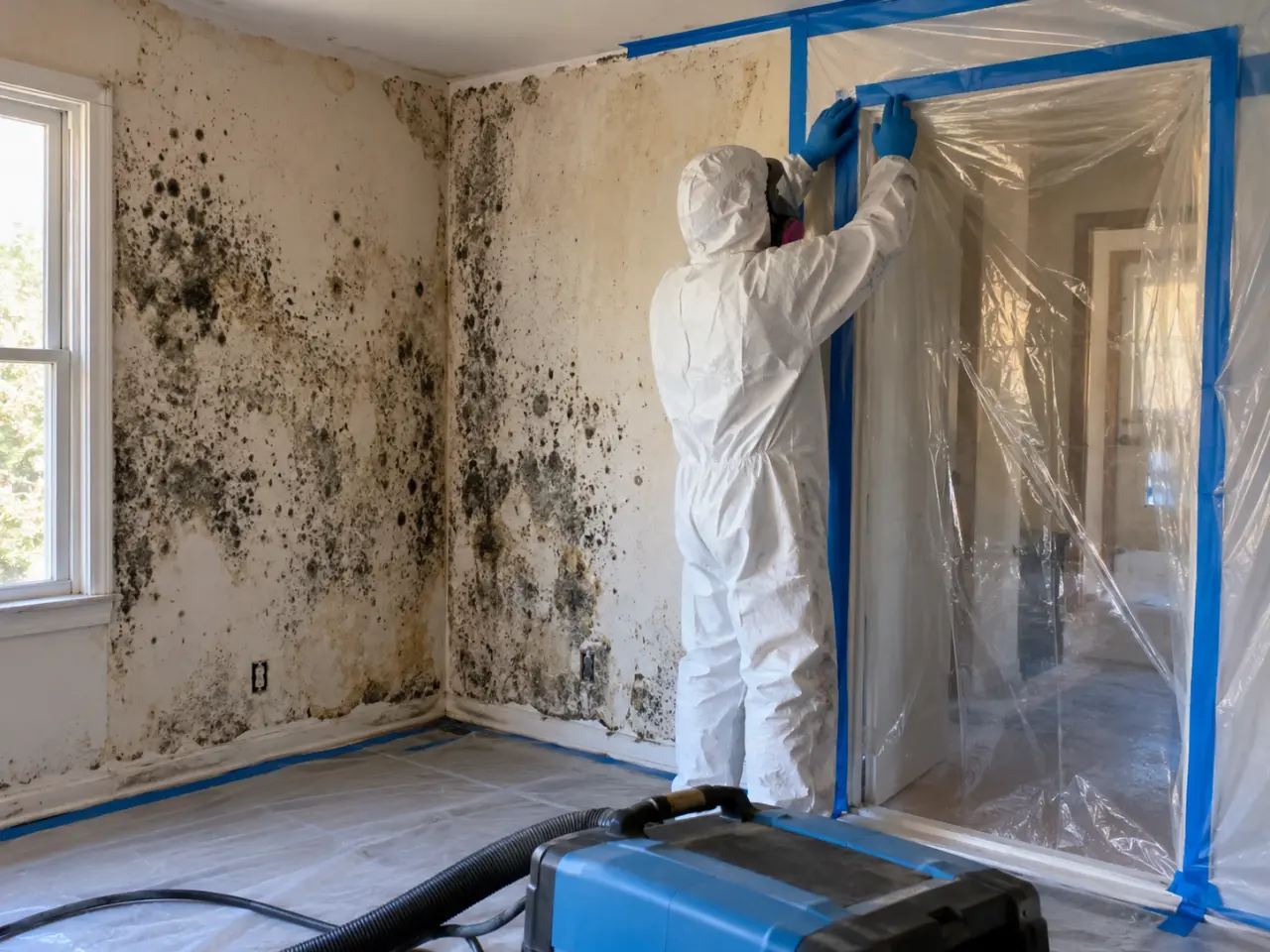
Hidden mold from aging plumbing in Toledo homes happens because old supply and drain lines leak slowly inside wall cavities, where the moisture never dries and mold colonies establish within 24 to 48 hours. The leak is often a drip you never see - a pinhole in galvanized steel, a cracked cast-iron hub, a failed wax ring - and by the time you smell it, the colony is usually several square feet. This article covers why Toledo's housing stock is especially prone to it, the warning signs worth acting on, how a proper inspection works, and what cleanup costs in 2026.
We run Mold Remediation Toledo OH calls every week in neighborhoods where the plumbing was installed before most of us were born, and the pattern is consistent. The mold is rarely where the stain is. It is behind the baseboard, under the subfloor, or inside the wall cavity six feet from the visible damage.
Why Aging Toledo Plumbing Hides Mold So Well
Toledo's older housing stock is the single biggest reason hidden mold from aging plumbing is so common here. A large share of homes in the central city, the Old West End, and the neighborhoods ringing downtown were built between 1900 and 1960, and many still carry their original galvanized steel supply lines or cast-iron drain stacks.
Galvanized pipe corrodes from the inside out. The interior narrows, pressure drops, and the pipe wall thins until it weeps at a joint or pinholes through the side. Cast iron is more durable but the hub joints and the horizontal runs under basement floors crack as the soil shifts. Neither failure is dramatic. Both release water at a rate slow enough that it soaks into framing, insulation, and plaster without ever pooling on the floor.
That slow release is the whole problem. A burst pipe gets fixed the same day because you see it. A weeping joint behind a kitchen wall can run for months. The cavity stays at 70 to 90 percent relative humidity, which is well above the 60 percent threshold where mold growth accelerates, and the paper facing on drywall becomes a food source. In a finished basement or a bathroom wall, nobody notices until the smell or the staining shows up.
Freeze-thaw cycles make it worse. Toledo averages roughly 130 days a year with overnight temperatures at or below freezing, and pipes running through exterior walls or unheated crawlspaces are the first to split. Each spring we get a wave of calls from homeowners who had a quiet leak all winter and found the mold in April.
Signs of Mold Behind Walls in Older Toledo Homes
Signs of mold behind walls in older Toledo homes usually show up as a cluster of small things rather than one obvious problem. Any single item on this list can be explained away. Two or three together, in a house with original plumbing, is a strong signal.
- A musty, earthy smell that is strongest in one room and does not clear after airing the house out.
- Paint or wallpaper that bubbles, peels, or feels soft along a baseboard, ceiling line, or the wall behind a vanity.
- Warped or cupped flooring near a bathroom, kitchen, or laundry area - a classic sign of a slow drain leak under the subfloor.
- Dark staining or a chalky white efflorescence on basement walls or the bottom of a stud cavity.
- Water meter movement when every fixture in the house is off. Ten minutes of watching the leak dial tells you whether you have an active hidden leak.
- Higher-than-normal water bills - a toilet flapper or a weeping supply line can add 2,000 to 6,000 gallons a month.
- Family members with recurring congestion, headaches, or itchy eyes that ease when they leave the house.
If you have already had water damage and mold in older Toledo houses repaired once and the smell came back, the moisture source was never fixed. Remediation without stopping the leak is a temporary fix.
How Do I Know If a Pipe Leak Caused Mold Behind a Wall?
You know a pipe leak caused the mold when the moisture is concentrated along a plumbing run rather than spread evenly across the wall. Mold from a roof leak or high indoor humidity tends to appear on ceilings, exterior corners, and cold surfaces. Mold from a supply or drain line follows the pipe - it shows up in a vertical band above a fixture, along a horizontal run between studs, or in a ring around a floor penetration.
Three checks narrow it down fast:
- Moisture meter readings. A pin-type meter on the drywall will read above 20 percent in the affected zone and drop back to normal 12 to 18 inches away from the pipe path.
- Thermal imaging. An infrared camera shows the cool band where evaporating moisture is pulling heat out of the wall. It does not confirm mold, but it confirms wet framing.
- Pressure test. A licensed plumber can isolate the supply lines and pressurize them to find a pinhole that is not yet visible.
If the meter and the camera agree, you have an active leak and an active mold problem. Both need to be addressed in that order - dry the structure, then remove the growth. Our Mold Inspection Toledo OH service exists specifically for this situation: we map the moisture, identify the source, and tell you what is actually contaminated before anyone starts cutting drywall.
How to Find Hidden Mold from a Plumbing Leak in Toledo
Finding hidden mold from a plumbing leak in Toledo starts with the plumbing, not the mold. If you skip that step, you are chasing a problem that will return the next time the pipe weeps.
Step 1: Confirm the leak is active
Shut off every fixture and watch the water meter's leak indicator for 10 minutes. If it moves, you have a live leak. If it does not, you may be dealing with an old leak that has already stopped - but the mold it left behind is still there and still needs removal.
Step 2: Trace the moisture path
Water follows framing and gravity. A leak on the second floor can surface in the first-floor ceiling 8 to 10 feet away. We use moisture meters and thermal imaging to follow the wet zone back to its origin rather than guessing from the stain.
Step 3: Test before you tear out
Not every dark stain is mold, and not every mold is the toxic black variety. Air sampling and surface sampling tell you what genus is present and how high the spore count is compared to an outdoor baseline. That data decides whether you need a small contained repair or a full Black Mold Removal Toledo OH protocol with negative air pressure and HEPA filtration.
Step 4: Dry the structure completely
Removing mold from wet drywall is pointless. The framing behind it has to come down to a verified dry standard - usually under 15 percent moisture content on a pin meter - before any reconstruction. Commercial-grade dehumidifiers and air movers do in two to three days what box fans and open windows cannot do at all in a Toledo winter. That is the work our structural drying Toledo crews handle after every pipe failure.
Step 5: Repair and prevent
Once the cavity is dry and clean, the drywall, trim, and paint go back. If the plumbing is original galvanized, this is also the moment to talk about replacement rather than a third patch on the same run.
What to Watch Out For
The most expensive mistake we see is treating the mold and ignoring the pipe. A homeowner paints over the stain with a mold-resistant primer, the smell fades for a month, and then the same joint weeps again into the same cavity. The second cleanup is always bigger than the first.
Other traps worth naming:
- Bleach on porous surfaces. Bleach kills surface mold on tile and tubs. It does not penetrate drywall, wood, or insulation, and it leaves the root structure intact.
- Running a box fan over a wet wall. That spreads spores through the room instead of drying the cavity.
- Assuming homeowners insurance covers it. Most policies cover sudden pipe bursts but exclude long-term seepage. A leak that has been running for months is often classified as maintenance.
- Ignoring the second bathroom. If one drain line has failed, the others in the same stack are the same age and the same condition.
- Testing with a DIY kit only. A petri dish left on a counter tells you spores exist somewhere. It does not tell you where or how much.
For homes in the older riverfront and west-side neighborhoods, we also watch for moisture that has nothing to do with plumbing - high water tables, poor grading, and basement seepage. That is why our Mold Remediation in Point Place work often combines plumbing repairs with foundation moisture control, because fixing one without the other leaves the same problem in place.
When to Call a Professional
Call a professional when the affected area is larger than about 10 square feet, when the mold is inside a wall or under a floor, or when anyone in the house has asthma or a compromised immune system. Those three conditions push a job past what a homeowner should handle with gloves and a respirator.
You should also call if the leak is still active. We cannot remediate mold in a cavity that is being re-wetted daily, and no honest contractor will try. The sequence is always: stop the water, dry the structure, remove the growth, repair the damage.
Toledo Mold Defense handles the whole chain - inspection, testing, containment, removal, drying, and reconstruction - so you are not coordinating three separate trades on a job that has to happen in the right order. We tell you upfront what the work will cost, and we do not start cutting until the moisture map says we know where the problem is.
Frequently Asked Questions
Can aging plumbing cause hidden mold in Toledo homes?
Yes. Galvanized steel and cast-iron lines common in Toledo homes built before 1960 corrode and weep at joints, releasing water inside wall cavities where it never dries. Mold can establish within 24 to 48 hours of a leak starting, and it often runs for months before anyone notices the smell.
How do I know if a pipe leak caused mold behind a wall?
Look at where the moisture sits. Pipe leaks concentrate mold in a vertical band above a fixture or along a horizontal run between studs. A moisture meter reading above 20 percent in that band, dropping to normal 12 to 18 inches away, points to a plumbing source rather than humidity or a roof leak.
Should I get a mold inspection after a plumbing leak in Toledo?
Yes, if the leak ran longer than 48 hours or the affected area is larger than 10 square feet. An inspection confirms whether the cavity is still wet, maps how far the moisture traveled, and tells you whether the growth is surface-level or needs full containment and removal.
Can hidden mold grow without a visible leak?
It can, and that is the most common scenario we see. A pinhole in a supply line or a cracked cast-iron hub releases only a few ounces a day - enough to keep a wall cavity at 70 to 90 percent humidity, which is well above the 60 percent level where mold growth accelerates. No puddle ever forms.
How much does mold remediation cost in Toledo in 2026?
Typical 2026 pricing in this area runs $1,200 to $3,500 for a single wall cavity or bathroom, and $4,000 to $9,000 or more when a finished basement or multiple rooms are involved. Cost depends on square footage, containment needs, and whether reconstruction is required after removal.
Get Help with Mold Remediation in Toledo
If you have original plumbing, a musty smell you cannot place, or a stain that keeps coming back, the moisture is still there and the mold will keep returning until it is found. We inspect, test, and remediate in the right order so the fix holds.
Call Toledo Mold Defense at (419) 880-8176 to schedule an inspection and get a straight answer on what your house actually needs.